| View this newsletter online | ||||||
|
||||||
Club AssemblyJoin us for an interactive Club Assembly as we kick off the new Rotary year by shaping the future of the Rotary Club of Atlanta West End. Rather than a traditional speaker program, this meeting will give every member the opportunity to help establish our priorities, strengthen our impact in Atlanta's West End, and identify new ways to enhance fellowship, service, and leadership within our Club. Together, we'll discuss meaningful service opportunities, strategies for recruiting and retaining members, ideas for increasing member engagement, and ways to build lasting partnerships throughout our community. Your voice, ideas, and experiences are essential as we work together to make this a year of growth, collaboration, and Service Above Self. Whether you're a longtime Rotarian or one of our newest members, your participation will help shape the direction and success of our Club in the year ahead. |
||||||
KeyWay Report: Cameron Turner, Executive Director of the Children's Day ShelterPresident Elect Rodney Fields led the July 10, 2026 meeting in place of our vacationing President Christopher Hempfling. Rodney introduced Ms. Cameron Turner, who leads the Atlanta Children’s Day Shelter, housed at North Avenue Presbyterian Church – Peachtree Street at North Avenue in Midtown Atlanta. Ms. Turner explained the organization’s mission: To break the cycle of poverty for families facing homelessness by building pathways to long-term self-sufficiency and providing quality early childhood education. The Atlanta Children’s Day Shelter pursues a 2-GEN (two generation) strategy, meaning that the healthy development and growth of children, including their education requires the full engagement of both the child and her/his parents-caregivers, and where possible their healthy growth development. To an extent, 2-GEN believes as the parent goes, so goes the child. Operationally, day-to-day, the Atlanta Children’s Day Shelter provides full-time care and support and early childhood learning for children birth through kindergarten. The Atlanta Children’s Day Shelter serves children ages zero-five, to PreK so the children are safe and receive caring and support and intellectual growth opportunities so that the parents-caregiver concentrate on work, which they would not be able to do if they had to be at home or stay with their children during normal workday hours. Ms. Turner explained the key services and supports provided as follows: (1) Trauma-informed care: Integrating mental health, speech, occupational, and physical therapies into children's daily educational programming, (2) Paths to self-sufficiency: Empowering families to define and achieve their own stability goals through individualized case management, (3) Collaborative nonprofit ecosystem: Partnering with shelters, schools, and community organizations to maximize reach and fill service gaps. Summarizing:
Further: The Atlanta Children’s Day Shelter families typically remain in the program between 12 and 36 months, followed by a one-year aftercare program called Steps to Success. The Atlanta Children's Day Shelter, celebrating its 40th anniversary, is a nonprofit organization, providing daytime services exclusively to homeless families with children between infancy and pre-K (up to age 5). The shelter operates five classrooms — infant, toddler 1, toddler 2, preschool, and pre-K — with a daily capacity of 48 children On-site nurse practitioners from Our House (another childen and family serving organization in Atlanta) provide physical medical care, including checkups and vaccinations, reducing the burden on parents to take time off work for routine appointments. On the parent side, each family is assigned a case manager and a trauma therapist upon enrollment. Case managers work with parents to identify their personal goals and connect them with housing support, employment and workforce development, financial literacy resources, and healthcare. The shelter currently serves 100% single mothers. Families on average remain enrolled for 12 to 36 months, with no set minimum or maximum. Upon graduation, families enter a one-year aftercare program called Steps to Success, which maintains access to mental health care, case management, and financial resources to prevent families from falling back into crisis. Children are dropped off between 7 and 8:30 a.m. and receive a hot breakfast. They then participate in educational curriculum throughout the morning, followed by a hot lunch and an afternoon nap. From approximately 2:30 to 4 or 6 p.m., children engage in additional learning activities and playground time until picked up by their parent or guardian. The Atlanta Children’s Day Shelter does not operate a bus service, but does provide free MARTA cards on a weekly basis to families without vehicles. Approximately 30% of enrolled parents have their own cars. Graduation is individualized. Key factors include securing a livable wage and stable, permanent housing. The formula differs for each family depending on their circumstances and goals. Question: How do you track children and families after they leave the program? Answer: The shelter uses a Salesforce database to track families. However, long-term data collection is challenging because many families, once out of homelessness, prefer to move forward and leave that chapter behind. Strong data exists for three to five years post-graduation, but long-term tracking remains a sector-wide challenge. Collaborative network: Ms. Cameron Turner emphasized that the Atlanta Children's Day Shelter operates as one piece of a larger collaborative network of Atlanta-area nonprofits and shelters. Partner organizations include City of Refuge, Our House, Sheltering Arms, domestic violence shelters, The Junior League of Atlanta, Atlanta Public Schools, and The Ansley School — a school exclusively serving homeless families that allows children to remain enrolled regardless of how frequently their family moves between shelters or temporary housing situations. Members interested in supporting the Atlanta Children's Day Shelter are encouraged to subscribe to the shelter's newsletter for monthly in-kind donation needs and volunteer opportunities. |
||||||
Keyway Report: Installation Banquet & Atlanta Technical CollegeThe June 26, 2026 meeting of the Rotary Club of Atlanta West End served as the final meeting of the outgoing Rotary year and included a presentation by Dr. Victoria Seals, President of Atlanta Technical College, followed by the installation of incoming club officers and assistant governors by incoming District Governor Cynthia Edwards, and a message to by Christopher Hempfling, our new AWER President.
The program moved to Installation of AWER Officers and Directors led by District Governor Cynthia. Governor Cynthia introduced Mr. Butch Carter who is serving as Assistant District Governor for AWER and noted that our own Mr. Jared Evans will become an Assistant District Governor serving 6 clubs throughout the district. |
||||||
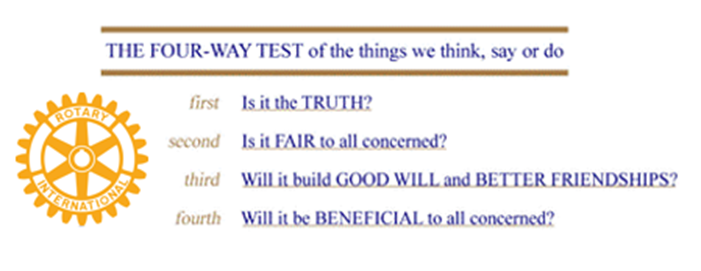
Agenda, Connections, & Four-Way Test
Meeting Agenda
Sign up to be a program chair in the new Rotary Year here today!
Supporting District 6900 starts with staying current on your district dues. Keeping your dues up to date ensures we can continue providing leadership development, youth programs, district events, club support, and the many resources that help our clubs thrive.
|
||||||
| View this newsletter online |